Occupational Therapy and Myoelectric Prosthetic Arms: Supporting Clients After Upper Limb Amputation
Learning to use a prosthetic limb after an amputation is a complex process. For many individuals, successful prosthetic rehabilitation, involves hours of practice, emotional adjustment, and the challenge of integrating advanced technology into everyday life.
For occupational therapists, supporting a client who is learning to use a myoelectric prosthetic arm requires both clinical expertise and an understanding of how to use the technology to promote independence.
Successful outcomes depend not only on the technology itself but also on effective prosthetic rehabilitation that focuses on functional goals, daily living tasks, and personalised training.
This article explores the role of occupational therapy in upper limb prosthetic rehabilitation and discusses the advantages and challenges of learning to use a myoelectric prosthetic arm.
What Is a Myoelectric Prosthetic Arm?
A myoelectric prosthetic arm is a robotic prosthesis that uses electrical signals generated by muscle contractions in the residual limb to control the elbow, wrist and/or hand movement. Using pattern-recognition software and artificial intelligence to interpret different muscle contractures on the residual limb.
With training, users can control movements such as:
Bending and straightening the elbow
Opening and closing the prosthetic hand
Changing grip patterns for different tasks
Stabilising and holding objects during activities
For individuals with above-elbow amputations, controlling a myoelectric prosthesis can be particularly complex because they must coordinate signals to control both the elbow joint and the hand simultaneously, which requires specialist training and hours of practice.
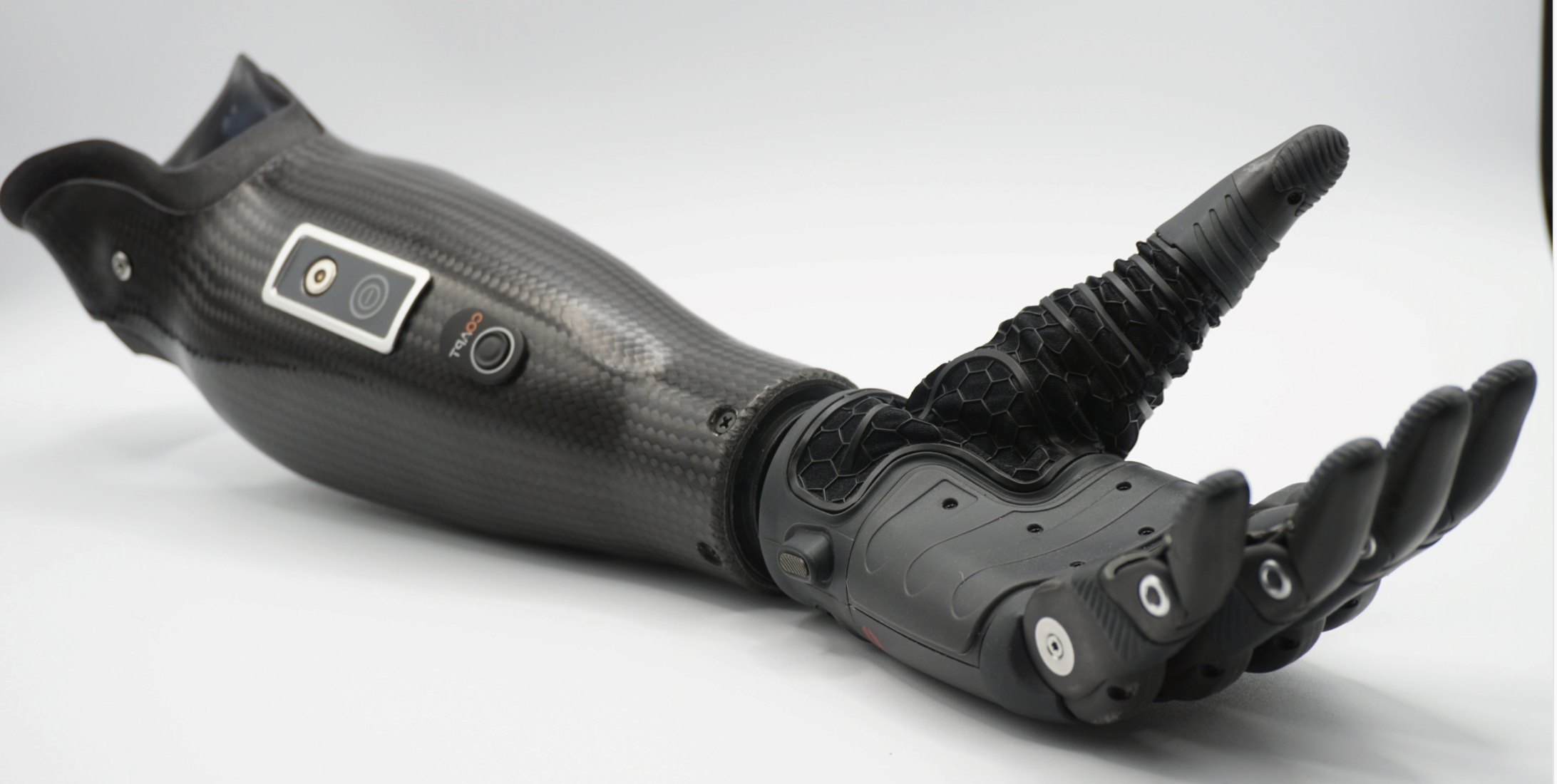
A myoelectric prosthetic arm is a robotic prosthesis that uses electrical signals generated by muscle contractions in the residual limb to control the elbow, wrist and/or hand movement.
The Role of Occupational Therapy in Upper Limb Prosthetic Rehabilitation
Occupational therapists play an important role in helping individuals adapt to wearing a prosthetic arm, master the technology and use it successfully in daily life. While prosthetists focus on designing and fitting the prosthetic limb, the occupational therapists’ goal is to help individuals use the prosthesis functionally in daily activities. Early rehabilitation focuses on strengthening and preparing the residual limb to tolerate wearing a prosthetic arm. This includes:
understanding the importance of effective residual limb care
maintaining skin integrity
managing swelling or discomfort
developing tolerance for wearing the prosthesis over a period of time
Strengthening exercises for the shoulder and upper limb are essential. Myoelectric prosthetic arms can be relatively heavy, so building strength and endurance helps users tolerate wearing the device throughout the day.
Movement Training and Prosthetic Control
Once the prosthesis is fitted, occupational therapy sessions will focus on learning how to control the device. This involves practising isolated muscle contractions so the sensors can accurately detect different commands. Clients need to repeat these controlled movements multiple times to calibrate the software and perfect muscle control.
Therapists will use simple tasks such as:
grasping and placing therapy balls
lifting lightweight objects to different heights
practising controlled opening and closing of the prosthetic hand
increasing reaction times when engaging in hand based remedial activities and games
As control improves, therapy progresses to more complex functional activities.
Functional Task Training
One of the most important roles of occupational therapy is helping individuals apply their prosthetic skills to meaningful daily living tasks.
These activities might include:
cooking and food preparation
dressing and personal care
household tasks, such as folding laundry
work-related activities
leisure activities or hobbies
By integrating prosthetic training into daily situations, occupational therapists help individuals to increase their independence and confidence.
Advantages of Using a Myoelectric Prosthetic Arm
Myoelectric prostheses offer several benefits compared with traditional manual prosthetic devices, such as improved functional movement.
Myoelectric prosthetic hands provide multiple grip patterns, allowing users to adapt their grasp depending on the task. By selecting the desired grip position using a button/switch on the back of the prosthetic hand, the individual can quickly change from one grip to another.
Common grip patterns include:
cylindrical grip for holding bottles or cups
tripod grip for small objects, such as when peeling an orange or securing buttons and fastenings
hook grip for carrying bags or handles
This versatility can significantly improve the ability to complete everyday tasks.
Normal Arm Movements
Because myoelectric prostheses respond to muscle contractions, they can feel more intuitive than body-powered devices that rely on harnesses and cables to control movement by using gross movement of the shoulder and residual limb. These exaggerated gross movements can also result in muscular-skeletal strains and injuries over time.
With practice, individuals using a myoelectric prosthesis can find the movements more natural and easier to integrate into daily activities.
Increased Independence
When successfully integrated into daily life, a myoelectric prosthesis can help individuals regain independence in activities such as:
cooking
household tasks
workplace responsibilities
leisure activities
For many users, the prosthetic arm gradually becomes a practical tool that supports everyday living.
Challenges of Using a Myoelectric Prosthetic Arm
Despite the advantages, learning to use a myoelectric prosthesis can also present several challenges. Understanding these limitations is important for occupational therapists supporting clients during rehabilitation.
Learning to Don the Prosthesis
One of the first challenges many users encounter is simply putting the prosthetic arm on.
Donning the device involves:
rolling the silicone sleeve onto the residual limb and ensuring the sensors are in the correct position
inserting the residual limb into the socket
securing the connection between the sleeve and socket
adjusting straps or harnesses
Completing this process independently with only one hand can be difficult, particularly during the early stages of rehabilitation. Occupational therapists need to work with clients to develop adaptive techniques or environmental modifications that ensure they can don and doff the myoelectric arm independently.
Muscle Control and Pattern Recognition
As previously stated, myoelectric prosthetics rely on precise muscle signals. For some users, especially those with above-elbow amputations, isolating specific muscle contractions can be challenging.
Certain movements may activate multiple muscles simultaneously, confusing the pattern recognition software and resulting in unwanted prosthetic movements. Consistent practice and recalibration are necessary to improve control.
Limited Sensory Feedback
One of the biggest limitations of current prosthetic technology is the lack of sensory feedback. Unlike a normal hand, a prosthetic hand does not provide information about:
how firmly an object is being held
the texture and feel of objects
temperature or pressure
As a result, delicate tasks—such as holding fragile items or handling small objects, can be difficult. However, prosthetic manufacturers are actively exploring new technologies that may provide sensory feedback in future prosthetic designs.
Technical Issues and Maintenance
Because myoelectric prostheses contain electronic components, they can occasionally experience technical problems. Users may need to return the device to the manufacturer or prosthetist for repairs or recalibration, on multiple occasions. During this time, they may have limited access to their prosthetic limb over a prolonged period.
Why Meaningful Occupation Matters in Prosthetic Training
A core principle of occupational therapy is that rehabilitation should focus on activities that are meaningful to the individual. Rather than practising exercises alone, occupational therapy sessions will incorporate daily living tasks that reflect the person’s daily routines, roles, and therapy goals.
For example, therapy might involve:
practising food preparation and cooking tasks
re-organising items on shelves for easy reach
identifying suitable work equipment
participating in hobbies or leisure activities
This approach not only improves functional skills but also helps individuals rebuild their identity and confidence following an amputation. When clients see how the prosthetic arm supports their daily life, motivation and engagement in therapy often increase significantly.
The Future of Myoelectric Prosthetics and Rehabilitation
Prosthetic technology continues to evolve rapidly. Manufacturers are exploring innovations such as:
improved sensory feedback
enhanced pattern recognition software
lighter prosthetic materials
As these technologies develop, the potential for improved functional outcomes after upper limb amputation will continue to grow. However, even the most advanced prosthetic device requires skilled rehabilitation and personalised training to be used effectively.
The Value of Occupational Therapy in Upper Limb Prosthetic Rehabilitation
Successful prosthetic rehabilitation is not simply about learning to operate a device. It’s about restoring independence and enabling individuals to return to meaningful occupations.
Occupational therapists play a vital role in bridging the gap between prosthetic technology and everyday function. By recommending bespoke treatment plans, and functional training, occupational therapists help individuals adapt to using prosthetic limbs and rebuild their lives following an amputation.
When advanced prosthetic technology is combined with person-centred occupational therapy, individuals can overcome significant challenges and regain the confidence to participate fully in work, home life, and leisure activities that bring them joy.